Dr. William Makis Repurposed Drug Protocol
- Author: Dr. William Makis, MD (Canadian radiologist and nuclear medicine physician)
- Goal: Treat aggressive cancers using high-dose antiparasitic drugs combined with metabolic support compounds to induce cancer cell apoptosis, target cancer stem cells, and restore mitochondrial function
- Duration: 12 weeks primary course (3 cycles of 3 weeks on / 1 week off); ongoing maintenance thereafter. May extend to 6–12 months for aggressive disease.
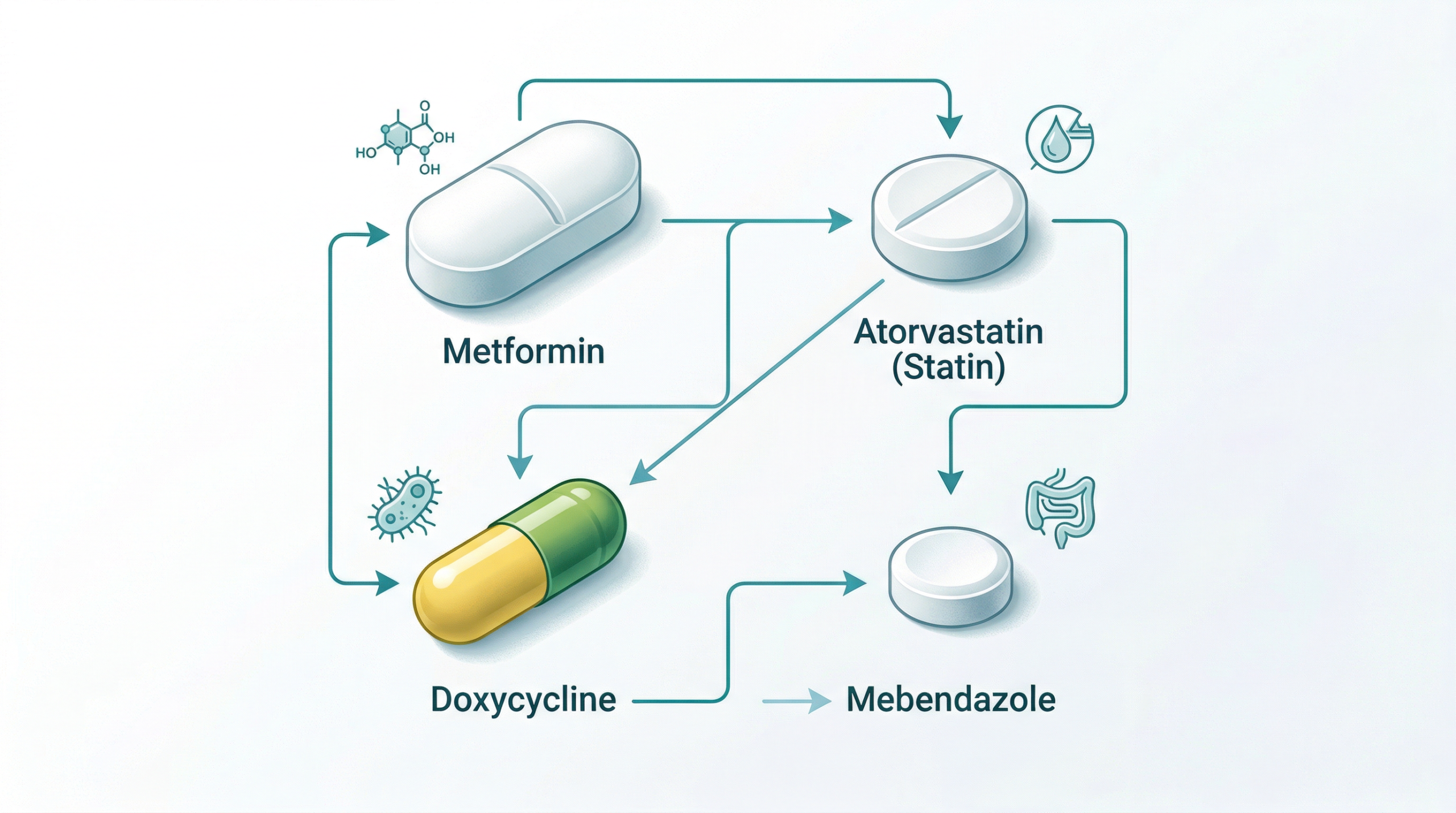
- Key compounds: Ivermectin (high-dose, weight-based), Mebendazole or Fenbendazole, Doxycycline, Metformin, Curcumin, Berberine, Vitamin D3, Milk Thistle/Silymarin
- Cycles: 3 weeks on / 1 week off (primary cycle); ivermectin and mebendazole: 6 days on / 1 day off per week
Overview
Dr. William Makis is a Canadian radiologist and nuclear medicine physician with over 100 peer-reviewed publications, formerly affiliated with the Cross Cancer Institute in Edmonton, Alberta. His repurposed drug protocol gained international attention from 2022 onward as he began documenting cancer patients developing unusually aggressive, rapidly-progressing cancers. He became a prominent proponent of repurposing antiparasitic drugs — particularly high-dose ivermectin — for cancer treatment, based on accumulating preclinical evidence and clinical case observations.
The theoretical foundation of the Makis protocol centers on the mitochondrial-stem cell connection in cancer biology. Malignant cells, particularly cancer stem cells (CSCs), rely on dysfunctional mitochondria and the Warburg effect — the preferential use of aerobic glycolysis — for energy. Ivermectin disrupts this through multiple mitochondrial mechanisms, while benzimidazoles (mebendazole or fenbendazole) target tubulin-dependent processes and directly impair glucose and glutamine uptake. Together, these compounds are proposed to create synthetic lethality in cancer stem cells. Makis emphasizes that the combination appears superior to either drug alone, and that synergy with standard chemotherapy has been observed in clinical case reports.
On September 19, 2024, Dr. Makis co-authored a peer-reviewed paper with Dr. Ilyes Baghli and Dr. Paul Marik titled “Targeting the Mitochondrial-Stem Cell Connection in Cancer Treatment: A Hybrid Orthomolecular Protocol,” published in the Journal of Orthomolecular Medicine (Vol. 39.3). This represents the first formally peer-reviewed publication of the protocol, providing dosing rationale referenced against clinical and safety studies. Makis maintains an active clinical presence and documents ongoing patient cases through public channels.
Dosage and Schedule
Dosing in the Makis protocol is stratified by cancer grade and aggressiveness. Ivermectin dosing is weight-based and increases with disease severity. All benzimidazoles require co-administration with fat for adequate bioavailability. The cycling schedule for the primary treatment phase is 3 weeks on / 1 week off, repeated for at least 3–4 cycles.
| Compound | Low-Grade Disease | Intermediate-Grade | High-Grade / Aggressive |
|---|---|---|---|
| Ivermectin | 0.5 mg/kg, 3×/week | 1.0 mg/kg, 3×/week or daily | 1.0–2.0 mg/kg/day (6 days on / 1 day off) |
| Mebendazole | 200 mg/day | 400 mg/day | 1000–1500 mg/day (up to 4 g/day in trials) |
| Fenbendazole (alt.) | 222 mg active/day | 222–444 mg active/day | 444 mg active/day (6 days on / 1 day off) |
| Doxycycline | 100 mg/day, continuous (all grades) | ||
| Metformin | 500 mg twice daily (all grades) | ||
| Curcumin (bioavailable) | 600 mg/day (all grades) | ||
| Berberine | 500 mg/day (all grades) | ||
| Vitamin D3 | 2500 IU/day (all grades) | ||
| Milk Thistle / Silymarin | 250–350 mg with each benzimidazole dose (hepatoprotection) | ||
Titration note: Ivermectin should be started at the lower end of the dose range and titrated upward over 2–4 weeks based on tolerance. A minimum starting dose of 24 mg/day (approximately 0.3 mg/kg for an 80 kg individual) is recommended before increasing toward weight-based therapeutic doses. A 2020 Phase I safety study established that ivermectin doses up to 1 mg/kg/day for up to 180 consecutive days were not associated with serious adverse events in cancer patients.
Fenbendazole scheduling note: If fenbendazole is substituted for mebendazole, the standard schedule is 3 days on / 4 days off (not daily). For high-grade disease, some practitioners use 6 days on / 1 day off. Both compounds must always be taken with a fatty meal or added fat (olive oil, avocado) to achieve adequate plasma levels.
Mechanism of Action
The Makis protocol combines agents that target cancer stem cells and mitochondrial function through complementary and synergistic mechanisms. The primary rationale is that cancer stem cells — the subpopulation responsible for tumor maintenance, metastasis, and treatment resistance — are selectively vulnerable to mitochondrial disruption and microtubule inhibition.
Ivermectin
Ivermectin inhibits PAK1 kinase via proteasome-mediated ubiquitination, disrupting Wnt/β-catenin, Akt/mTOR, Hippo, and MAPK signaling pathways that are critical for cancer cell proliferation and survival. It induces PAK1-mediated cytostatic autophagy and caspase-dependent apoptosis, and directly impairs mitochondrial function through disruption of mitochondrial membrane potential and induction of oxidative stress. A 2020 review in Pharmacological Research documented these mechanisms comprehensively. Ivermectin specifically targets cancer stem cells, inhibiting self-renewal more effectively than paclitaxel in breast cancer models, and has shown greater efficacy than gemcitabine (standard chemotherapy) at reducing tumor volume in pancreatic cancer in preclinical studies.
Mebendazole / Fenbendazole
Mebendazole and its veterinary equivalent fenbendazole are benzimidazole compounds that impair microtubule assembly by binding to beta-tubulin, causing mitotic arrest and apoptosis. They specifically restrict glucose and glutamine uptake by cancer cells through GLUT transporter disruption and metabolic enzyme inhibition, and activate the p53 tumor suppressor pathway. Both target cancer stem cells by depleting ALDH1+ populations and inhibiting hedgehog and Wnt pathways. Mebendazole additionally inhibits VEGFR2 kinase (anti-angiogenic) and has demonstrated activity superior to standard chemotherapy in glioblastoma preclinical models. The synergy between ivermectin and benzimidazoles in cancer stem cell elimination has been noted in multiple preclinical studies.
Doxycycline
Doxycycline inhibits the mitochondrial 70S ribosome, blocking synthesis of oxidative phosphorylation complex proteins. It selectively induces apoptosis in cancer stem cells via mitochondria-associated endoplasmic reticulum membrane (MAM) disruption and ER stress through the ATF4/PUMA pathway. Doxycycline also reduces cancer stemness markers including Oct4, Sox2, Nanog, and CD44, making it a targeted anti-CSC agent that complements ivermectin’s mitochondrial activity.
Metformin
Metformin activates AMPK, leading to mTOR inhibition and suppression of the Warburg effect and HIF-1α transcription. It reduces IGF-1 and insulin signaling, complementing ivermectin’s mitochondrial targeting by simultaneously suppressing glycolytic energy production.
Curcumin
Curcumin (in a bioavailable formulation) is a pleiotropic anti-inflammatory agent that inhibits NF-kB, COX-2, and STAT3 signaling — all of which are upregulated in cancer and contribute to treatment resistance. It is also anti-angiogenic via VEGF suppression and may enhance the bioavailability and cellular uptake of co-administered compounds.
Berberine
Berberine provides additional AMPK activation that inhibits mTOR and NF-kB, while also blocking fatty acid synthesis. It reduces cancer cells’ access to both glucose and lipid fuel lines, reinforcing the metabolic blockade established by metformin and the benzimidazoles.
Important Considerations
This protocol has not been evaluated in formal clinical trials as a combined regimen. The information presented is for educational purposes only. Always consult a qualified healthcare professional before starting any new treatment protocol.
- The protocol’s evidence base consists of preclinical studies, case reports, and observational data. No randomized controlled trial has evaluated this combination.
- Ivermectin at doses of 1 mg/kg/day or higher requires medical supervision; neurological side effects have been reported at very high doses.
- Liver function tests (ALT, AST) should be monitored every 4–6 weeks, especially when using mebendazole or fenbendazole.
- If fenbendazole is substituted for mebendazole, note the different cycling schedule (3 days on / 4 days off, not daily).
- A fatty meal is essential when taking any benzimidazole compound. Without co-administered fat, plasma absorption may be substantially reduced.
- Complete blood count (CBC) should be monitored periodically, particularly at higher mebendazole doses, due to a reported risk of thrombocytopenia.
- Patients should disclose all agents to their oncologist, particularly before or during chemotherapy, due to potential drug-drug interactions.
- The 2024 Journal of Orthomolecular Medicine paper provides the formal published rationale for the protocol’s mechanistic basis, though it is not a clinical trial report.
- Milk thistle / silymarin is recommended co-administration with each benzimidazole dose as a hepatoprotective measure.
- Baghli I, Makis W, Marik PE. Targeting the Mitochondrial-Stem Cell Connection in Cancer Treatment: A Hybrid Orthomolecular Protocol. J Orthomolecular Med. 2024;39.3. ISOM
- Tang MJ et al. Ivermectin, a potential anticancer drug derived from an antiparasitic agent. Pharmacol Res. 2020. PMC
- Juarez M et al. Progress in Understanding the Molecular Mechanisms Underlying the Antitumoral Effects of Ivermectin. Drug Des Devel Ther. 2020. PMC
- Chai JD et al. Mebendazole as a Candidate for Drug Repurposing in Oncology: An Extensive Review of Current Literature. Cancers (Basel). 2019. PMC
- Yoo JS et al. Fenbendazole as an Anticancer Agent? A Case Series of Self-Administered Fenbendazole. 2025. PubMed
- de Castro CG Jr et al. Safety profile of high-dose ivermectin: a phase I study. 2020. PubMed
- Makis, William. Ivermectin and Fenbendazole: Treating Turbo Cancer — Dr. William Makis Protocol. 2024. OneDayMD
- Makis, William. Repurposed drugs for cancers (YouTube). 2025. YouTube