Fenbendazole absorption plays a central role in how the compound behaves in off-label protocols.
Fenbendazole has very low water solubility — the body may absorb only a small portion of an oral dose. For this reason, researchers and protocol designers often look for ways to improve bioavailability.
Recent studies suggest that certain dietary fats, especially oleic acid, may help increase absorption. Dissolution research explains how fenbendazole behaves inside the digestive tract.
Enhancing Absorption with Oleic Acid
Fenbendazole belongs to the benzimidazole class of compounds, which typically show poor solubility in water. To address this, many protocols recommend pairing the compound with dietary fats — in particular, fats rich in oleic acid. Olive oil stands out because it is widely available and easy to tolerate.
What the Research Shows
In a study by Liu et al. (2012), researchers evaluated mebendazole, a compound closely related to fenbendazole. When combined with oleic acid:
📊 Key findings from Liu et al. (2012):
- Serum concentrations increased significantly
- Bioavailability rose by approximately 1.6 to 2.8 times
- Olive oil produced the strongest effect among the tested oils
- Higher serum levels correlated with improved performance in parasite models
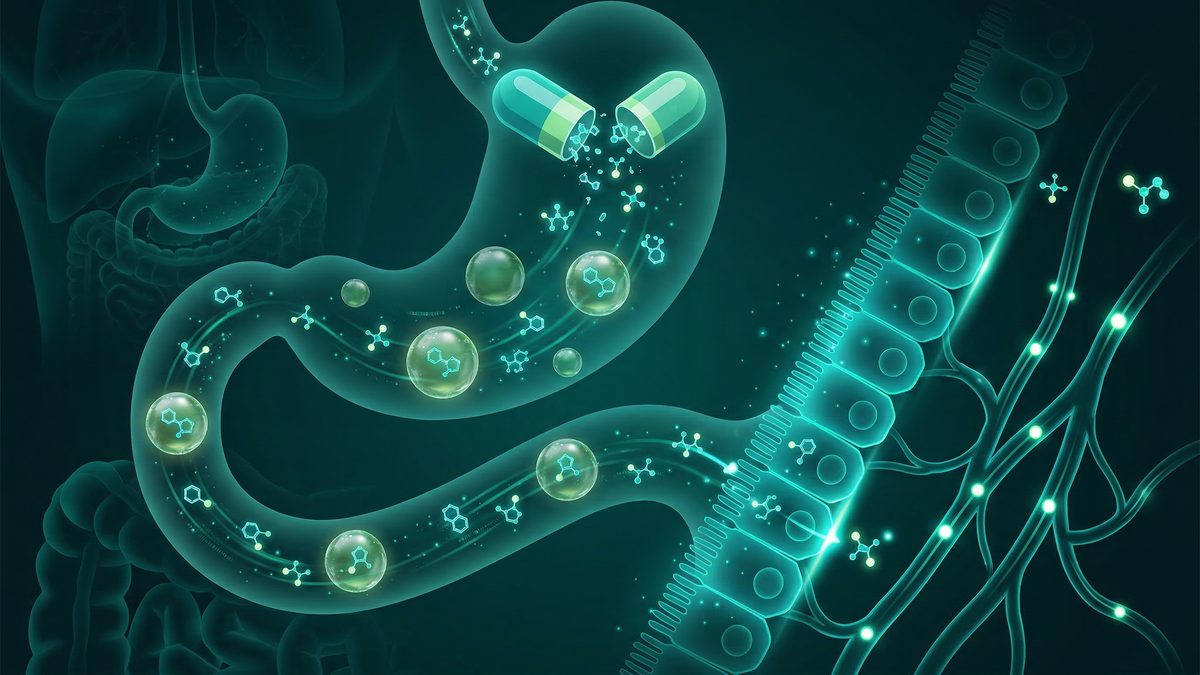
Illustration: Oral drug absorption pathway — capsule dissolution and intestinal uptake enhanced by dietary fats
Because fenbendazole shares strong structural similarities with mebendazole, many researchers expect a comparable response. Users frequently take fenbendazole with a fatty meal, mix it with olive oil, or combine it with foods such as yogurt or peanut butter.
Practical Administration Tips
| Method | How to Use | Why It Helps |
|---|---|---|
| Olive oil | ~1 tablespoon mixed in | Richest in oleic acid — strongest effect |
| Fatty meal | Take during or after eating | Slows gastric emptying, extends absorption window |
| Yogurt | Mix powder into yogurt | Convenient, contains fat for dissolution |
| Peanut butter | Mix into a spoonful | High fat content, easy to take |
Dissolution Studies: What Happens in the Gut
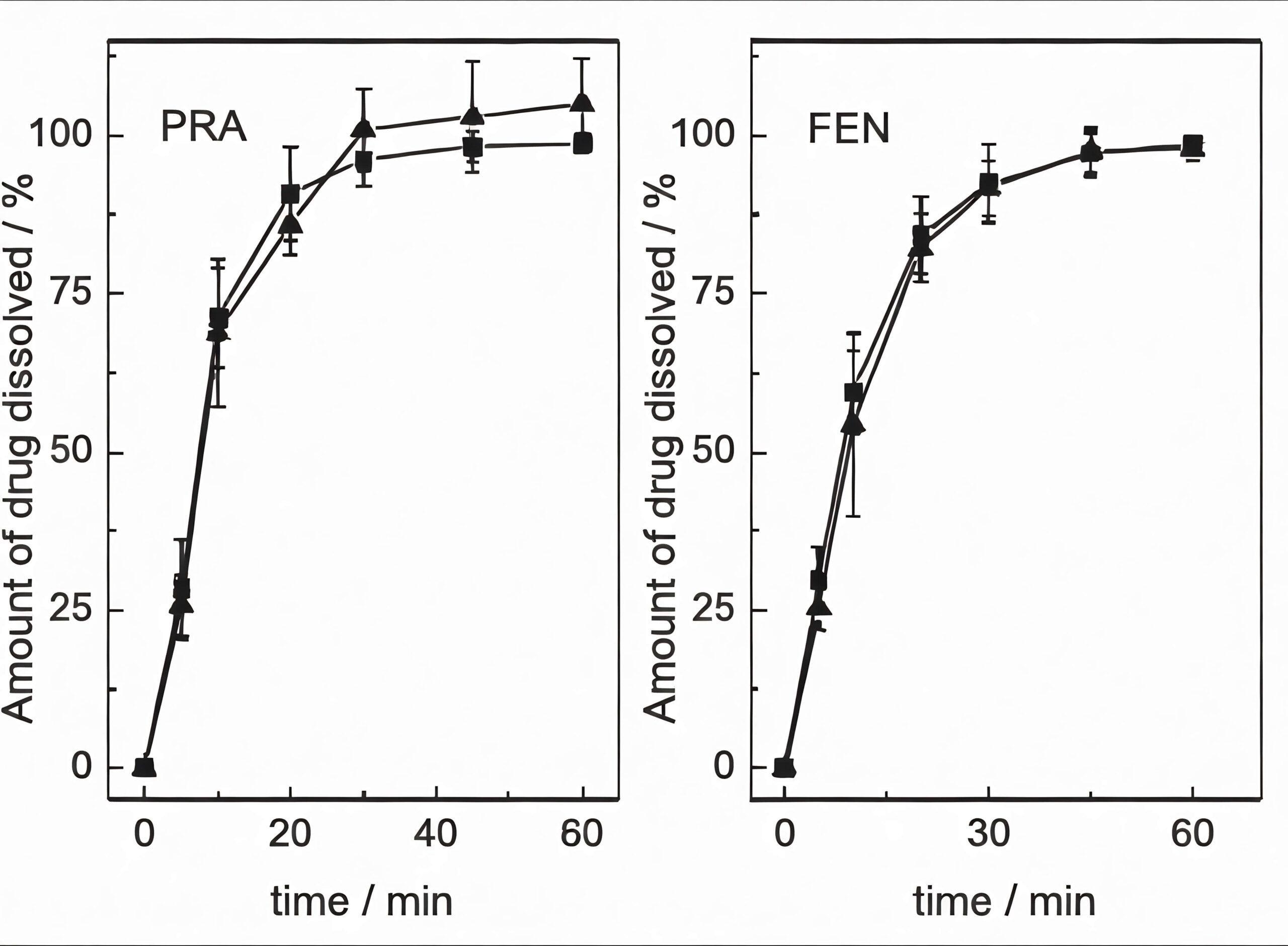
One study — Development of a Dissolution Test for Fenbendazole–Praziquantel Capsules (UV-PLS Method) — examined how the compound dissolves under simulated gastrointestinal conditions. Researchers tested pH levels from 1.2 (stomach) to 6.8 (intestinal) at 37°C.
🔬 Key findings:
- Slow dissolution — less than 50% dissolved after 60 minutes
- Better release at higher pH — dissolution increased near pH 6.8
- Solubility is the main barrier — poor water solubility limits uptake
These results confirm why fat-based strategies that support emulsification improve delivery. For more detail, see our Protocols Page.
Saturated Fats and Alternative Delivery Pathways
Some chemists and protocol designers also discuss saturated fats, such as butter. The idea focuses on absorption pathways rather than solubility:
- Long-chain saturated fats may support alternative transport mechanisms
- A portion of the compound may bypass some first-pass liver metabolism
- However, direct comparative data remains limited
The Role of Food Intake
One study in dogs found that administering fenbendazole with food — regardless of fat content — significantly increased bioavailability compared to an empty stomach. This suggests the mere presence of a meal slows gastric emptying and extends the dissolution window.
💡 Practical tip: Take fenbendazole during or immediately after a meal, preferably with a fat-rich food. This is the single most accessible way to improve absorption without any special formulation.
Bioavailability Data from Animal Studies
Several pharmacokinetic studies in animals have quantified fenbendazole absorption. Here is a summary:
| Animal | Bioavailability | Time to Peak | Key Note |
|---|---|---|---|
| Pigs | 27.1% | ~3.75 hours | Extensive first-pass metabolism; oxfendazole is main circulating form |
| Llamas | Low (slow absorption) | ~28.4 hours | Much slower than monogastric animals; half-life 16–36 hours |
| Sheep (nanocrystals) | 1.92× standard | 0.54 hrs vs 3.3 hrs | Nanocrystal formulation cuts lag time by 80%+ |
Key takeaway: Oral fenbendazole bioavailability is generally low across species. However, formulation strategy, food intake, and particle engineering all significantly influence the final outcome.
Emerging Formulation Approaches
Pharmaceutical researchers are exploring advanced techniques to overcome fenbendazole’s poor water solubility.
| Approach | How It Works | Result |
|---|---|---|
| Solid dispersions | Dispersed in water-soluble polymer (Soluplus) | 85% dissolution vs ~20% for standard drug — 4× improvement |
| Nanocrystals | Particle size reduced to nanometer range | Bioavailability nearly doubled; absorption lag cut by 80%+ |
| Chitosan microspheres | Encapsulated in biocompatible polymer from shellfish | Controlled release in GI tract; reduces unabsorbed drug |
| Lipid-based formulations | Pre-dissolved in oils or lipid carriers | Mimics dietary fat effect in controlled pharmaceutical format |
Most of these approaches remain in the research stage. For current protocol users, the most accessible strategy remains combining fenbendazole with dietary fats, particularly those rich in oleic acid.
Conclusion
Fenbendazole performance depends not only on dosage but also on how well it is absorbed.
📌 Summary — what matters most:
- Pairing with oleic-acid-rich fats can raise serum levels by up to 2.8×
- Dissolution in the gut is slow — less than 50% in 60 minutes
- Taking fenbendazole with food significantly improves bioavailability
- Nanocrystal formulations can nearly double absorption
- Solid dispersions achieve 85% dissolution vs ~20% for raw powder
For individuals who choose to use fenbendazole, combining it with appropriate fats — such as olive oil or saturated fats — may help improve absorption and systemic availability.
Sources
- Liu Y, et al. The effects of different vegetable oils and their fatty acid compositions on the bioavailability of mebendazole in beagle dogs. J Vet Pharmacol Ther. 2012;35(4):362-8. PubMed
- Development of a Dissolution Test for Fenbendazole–Praziquantel Capsules Using UV-PLS Method. ResearchGate
- Petersen MB, Friis C. Pharmacokinetics of fenbendazole following intravenous and oral administration to pigs. Am J Vet Res. 2000;61(5):573-6. PubMed
- Oral pharmacokinetics of fenbendazole in llamas, South American Camelids. Small Ruminant Res. 2000;37(3):217-21. PubMed
- Melian ME, et al. Improving the in vitro dissolution rate and pharmacokinetic performance of fenbendazole in sheep using drug nanocrystals. Res Vet Sci. 2022;143:44-52. PubMed
- McKellar QA, et al. Oral absorption and bioavailability of fenbendazole in the dog and the effect of concurrent ingestion of food. J Vet Pharmacol Ther. 1993;16(2):189-98. PubMed
- Evaluation of the Drug-Polymer Compatibility and Dissolution Performance of Fenbendazole-Soluplus Solid Dispersions. Pharmaceutics. 2026. PubMed
- Formulation and optimization of chitosan-based fenbendazole microparticles. Int J Pharm. 2024. PubMed