The Ben Williams Glioblastoma Cocktail Protocol
- Author: Ben A. Williams, PhD (Emeritus Professor of Psychology, UCSD; 30+ year GBM survivor)
- Goal: Maximize long-term survival in glioblastoma multiforme through a multi-agent cocktail: combining standard chemotherapy with off-label drugs that inhibit PKC, reverse multi-drug resistance, induce differentiation, and provide immune support
- Duration: Active treatment ~18 months (surgery, radiation, 6 chemotherapy rounds). Maintenance supplementation: indefinite (Williams continued melatonin and supplements for 20+ years post-treatment).
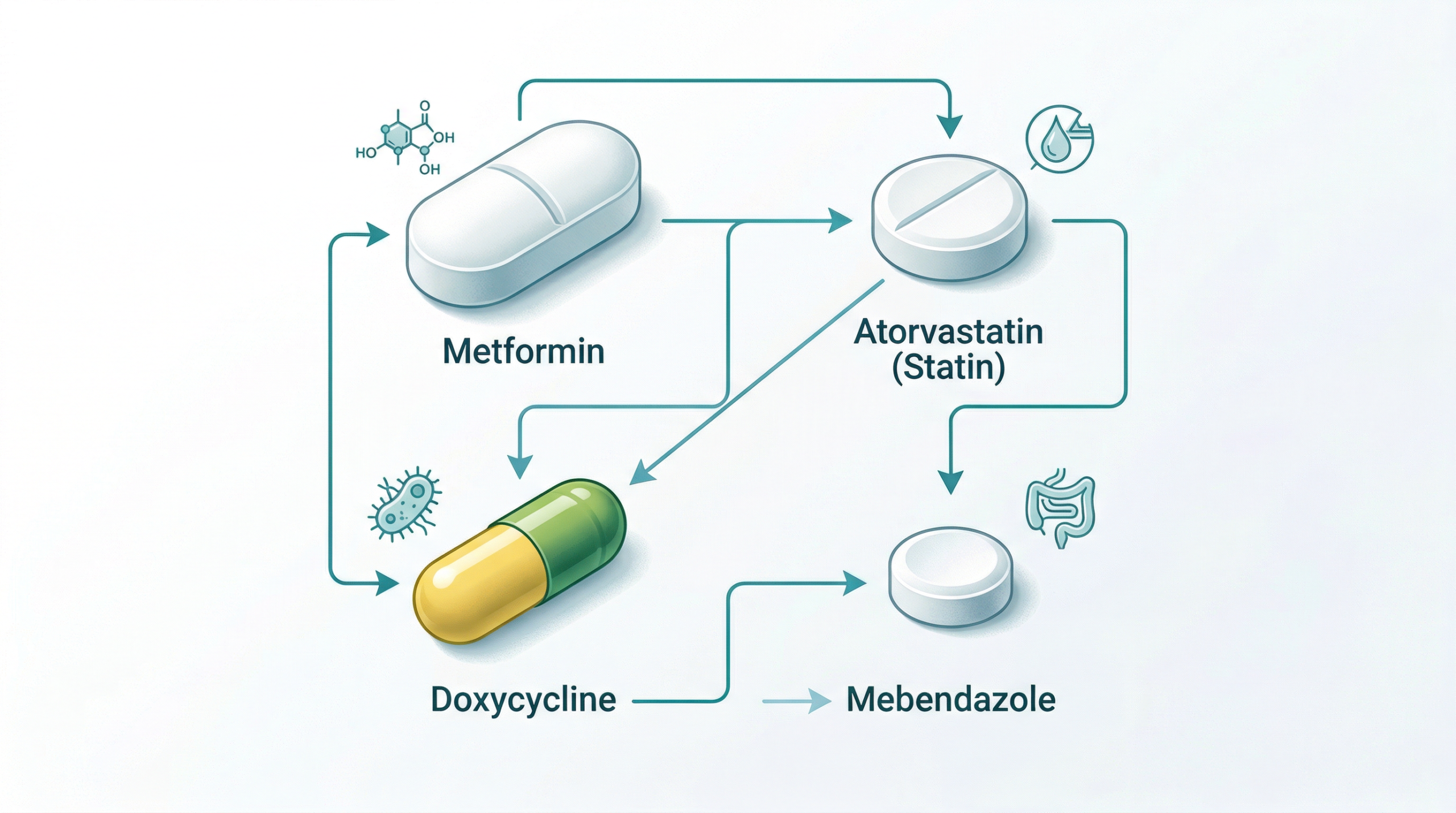
- Key compounds: Tamoxifen (high-dose, 220 mg/day), Verapamil (600 mg/day, peri-chemotherapy), Accutane/Isotretinoin (160 mg/day, 2-weeks-on/1-week-off), PSK (Polysaccharide Krestin), Melatonin (15 mg/day)
- Cycles: Chemotherapy: 6 rounds over ~12 months. Tamoxifen: continuous ~3 years. Verapamil: 1 week surrounding each chemo dose only. Accutane: 2-weeks-on / 1-week-off for ~6 months.
Overview
Ben A. Williams is an Emeritus Professor of Psychology at the University of California, San Diego (UCSD), who was diagnosed with a grade IV glioblastoma multiforme (GBM) on March 30, 1995, at the age of 50. Given a median prognosis of 12–18 months, Williams refused to limit himself to standard treatment. He undertook an intensive self-directed review of PubMed literature and identified adjuvant agents with GBM-relevant mechanisms, assembling a multi-drug cocktail that he added to his standard chemotherapy. His survival for 25 or more years — remaining cancer-free as of his most recent public updates — makes him one of the most extensively documented long-term GBM survivors on record. His approach has directly influenced the clinical cocktail movement in neuro-oncology.
Williams’ core therapeutic philosophy rests on three premises: first, that any successful GBM treatment must be systemic because microscopic tumor extensions cannot be fully resected; second, that multi-agent combinations are necessary because single-agent resistance emerges rapidly; and third, that standard treatment alone is insufficient and must be augmented with agents that address chemotherapy resistance, tumor cell signaling, immune function, and angiogenesis. He published his approach in the 2002 book Surviving Terminal Cancer: Clinical Trials, Drug Cocktails, and Other Treatments Your Oncologist Won’t Tell You About, with free online updates through 2017 (co-authored with Stephen Western). Williams is a scientist, not a physician, and emphasizes throughout his writing that patients must work with their oncologists and disclose all agents being used.
Williams’ initial 1995 protocol was relatively targeted: high-dose tamoxifen as a PKC inhibitor and chemotherapy sensitizer, verapamil as a multi-drug resistance reversal agent, and Accutane (isotretinoin) as a differentiation inducer. Melatonin and PSK (Polysaccharide Krestin) were added starting with his second chemotherapy round. The approach was driven by precise biological rationale for each agent rather than broad empiricism. It is worth noting that the current standard of care for GBM uses temozolomide (Stupp protocol, approved 2005) rather than the BCNU/PCV chemotherapy Williams received in 1995; the cocktail philosophy he developed is best adapted to augment current protocols rather than replicated exactly.
Dosage and Schedule
The Williams protocol was implemented alongside standard chemotherapy. Key compounds and their doses are documented in Williams’ own published accounts and in the Musella Foundation Virtual Trials database. The table below presents the core off-label agents; standard chemotherapy (BCNU and PCV cycles) is not included in detail as it is specific to the 1995 treatment era.
| Compound | Dose | Schedule | Notes |
|---|---|---|---|
| Tamoxifen (high-dose) | 220 mg/day | Continuous daily; started 2 weeks before first chemo; continued ~3 years (June 1995 – March 1998) | PKC inhibition requires concentrations several-fold above standard breast cancer dose (20–40 mg). Significant DVT/thromboembolism risk at high dose (~20% in trials). |
| Verapamil | 600 mg/day | 1-week peri-chemotherapy window only (around each BCNU or CCNU dose); not continuous | P-glycoprotein / MDR1 inhibitor at this dose. Cardiovascular monitoring required (bradycardia, hypotension). |
| Accutane / Isotretinoin | 160 mg/day | 2 weeks on / 1 week off; ~5–6 months total (July – December 1995) | Cycling schedule prevents receptor downregulation. Teratogenic; requires strict contraception. |
| PSK (Polysaccharide Krestin) | Standard Japanese clinical dose: 3 g/day (1 g × 3 daily) | Started with 2nd chemotherapy round (August 1995); continued ongoing | Trametes versicolor mushroom extract. Licensed anti-cancer adjuvant in Japan (Krestin). Available as dietary supplement elsewhere. |
| Melatonin | 15 mg/day | Nightly at bedtime; started August 1995; continued 5+ years; ongoing maintenance use | Anti-angiogenic, immunostimulatory, and circadian-regulatory. Long-term continuation recommended. |
| Fenbendazole (later addition) | 222 mg active/day (1 g granules) | 3 days on / 4 days off (standard benzimidazole schedule); added to maintenance protocol, not used in 1995 initial treatment | Referenced in updated editions of Williams’ guide. Must be taken with fat for absorption. |
Williams also maintained an extensive long-term supplementation regimen including melatonin, curcumin, resveratrol, silibinin (from milk thistle), genistein (from soy), green tea extract / EGCG, selenium, and high quantities of cruciferous vegetables, berries, and omega-3 fatty acids from flax seed and borage seed oil. Williams emphasizes that these long-term dietary and supplementary interventions may contribute to ongoing systemic anti-cancer activity and immune support.
Mechanism of Action
Each compound in the Williams protocol addresses a distinct vulnerability in GBM biology. The combination was designed to work at multiple levels simultaneously: sensitizing the tumor to chemotherapy, reversing resistance mechanisms, inducing differentiation, and activating immune clearance.
Tamoxifen (High-Dose)
At doses of 220 mg/day, tamoxifen achieves serum concentrations sufficient to inhibit protein kinase C (PKC) in glioma cells — a dose-dependent effect that cannot be achieved at the standard 20–40 mg dose used in breast cancer. GBM cells rely heavily on PKC-dependent proliferative signaling; PKC inhibition causes G1 phase cell cycle arrest. Tamoxifen at this dose also radiosensitizes GBM cells, potentially enhancing radiation efficacy, and potentiates chemotherapy drugs. The RTOG BR-0021 Phase 2 clinical trial established the clinical precedent for high-dose tamoxifen (80 mg/m² per day) in GBM, and Couldwell et al. used 160–200 mg/day in earlier studies. Tamoxifen additionally has ER-independent direct effects on glioma cell lines.
Verapamil
At 600 mg/day — a dose well above standard cardiovascular use — verapamil inhibits P-glycoprotein (P-gp / MDR1), the membrane pump that exports chemotherapy drugs from cancer cells. P-gp-mediated export is a primary mechanism of multi-drug resistance (MDR) in GBM. By blocking P-gp during the chemotherapy week, verapamil may restore intracellular accumulation of BCNU, CCNU, and procarbazine, potentially recovering sensitivity in otherwise resistant cells. Verapamil is used only during the peri-chemotherapy window, not continuously, to minimize cardiovascular effects.
Accutane / Isotretinoin
Isotretinoin (13-cis retinoic acid) acts as a differentiation-inducing agent. Retinoids bind to retinoic acid receptors (RARα/RARβ) and force cancer stem-like glioma cells toward terminal differentiation, reducing their self-renewal capacity and reversing the undifferentiated, stem-cell phenotype. Isotretinoin also inhibits angiogenesis via VEGF suppression and has direct anti-proliferative effects. The MD Anderson Brain Tumor Center used isotretinoin as maintenance therapy for GBM, with Phase 2 studies showing a median survival of 58 weeks in recurrent GBM as a single agent. The 2-weeks-on / 1-week-off cycling schedule is standard for retinoic acid therapy to prevent receptor downregulation from continuous exposure.
PSK (Polysaccharide Krestin)
PSK is a protein-bound polysaccharide from Trametes versicolor (Turkey Tail mushroom) that modulates immune response. It stimulates T-cell and natural killer (NK) cell activity, augments killer T-cell responses against tumor cells, and restores suppressed immune function in tumor-bearing states. A 1984 clinical study of 20 GBM patients treated with ACNU plus PSK found that 6 of 20 patients (30%) survived usefully beyond 5 years — a remarkable result for the pre-temozolomide era, and the key PSK reference cited by Williams. A 2022 review in Biomedicines documented PSK’s anti-tumor mechanisms across multiple cancer types.
Melatonin
Melatonin is a pineal hormone with multiple anti-cancer effects: it modulates circadian regulation of tumor growth, is anti-angiogenic via VEGF suppression, immunostimulatory (augmenting NK cell and T-cell activity), and has direct pro-apoptotic effects in glioma cell lines. Melatonin also reduces cancer cell invasiveness. Williams began melatonin at 15 mg nightly in August 1995 and continued it for many years as part of his long-term maintenance approach.
Fenbendazole (Later Addition)
Fenbendazole was not part of Williams’ original 1995 treatment but is referenced in updated editions of his guide as a useful addition to GBM protocols. As a benzimidazole antiparasitic, it inhibits tubulin polymerization, restricts cancer cell glucose and glutamine uptake, activates the p53 tumor suppressor pathway, and targets cancer stem cells by depleting ALDH1+ populations. Its ability to cross the blood-brain barrier makes it particularly relevant for GBM.
Important Considerations
This protocol has not been evaluated in formal clinical trials as a combined regimen. The information presented is for educational purposes only. Always consult a qualified healthcare professional before starting any new treatment protocol.
- Williams’ original 1995 protocol predates temozolomide (approved 2005). Current GBM standard of care uses the Stupp protocol (radiation plus temozolomide). The cocktail approach is best adapted to augment current SoC, not replicated with 1995-era chemotherapy agents.
- High-dose tamoxifen (220 mg/day) carries a significant risk of thromboembolic events. The RTOG BR-0021 trial reported a 20.8% thromboembolic event rate. Anticoagulant prophylaxis and close monitoring are essential.
- Verapamil at 600 mg/day is a high dose; cardiovascular monitoring for bradycardia and hypotension is required. This dose is used only during chemotherapy weeks, not continuously.
- Accutane (isotretinoin) must not be used by women of childbearing age without strict contraception; it is highly teratogenic. In the United States, iPLEDGE program enrollment is required.
- Williams cautions that his specific protocol was designed for his own case and that outcomes are highly individual; he does not claim it is universally applicable or directly reproducible.
- The CUSP9 (Coordinated Undermining of Survival Paths, 9 drugs) clinical trial was directly derived from the cocktail philosophy Williams pioneered. Phase I results showed 3 of 10 recurrent GBM patients became tumor-free over a 3-year period.
- Williams’ updated guide (2017, available free online) covers current options including temozolomide combinations, bevacizumab (Avastin), tumor treating fields (TTFields), and newer off-label agents.
- PSK (Krestin) is licensed as an anti-cancer adjuvant in Japan; it is not formally licensed in the US or EU but is available as a dietary supplement.
- Williams is a scientist, not a physician, and emphasizes the importance of partnering with an oncologist and disclosing all agents being used.
- Fenbendazole was added to his protocol later and was not part of the original 1995 treatment; it appears in updated editions of his guide.
- Williams, Ben A. Brain Tumor Survivor Story — Ben W. Musella Foundation Virtual Trials. 2022. VirtualTrials.org
- Williams, Ben A. Surviving Terminal Cancer: Clinical Trials, Drug Cocktails, and Other Treatments Your Oncologist Won’t Tell You About (updated edition). 2017. BTAA
- Williams, Ben A. (interview). Ben Williams PhD — Glioblastoma Survivor. Cure Science Today. YouTube, 2021. YouTube
- Mehta MP et al. Phase 2 trial of radiation plus high-dose tamoxifen for glioblastoma multiforme: RTOG protocol BR-0021. Neuro-Oncology. 2006. PMC
- Masuda K et al. Long-term survival of patients with brain tumors treated with ACNU and PSK postoperatively. 1984. PubMed
- VirtualTrials.com. High Dose Tamoxifen For Brain Tumors — Clinical Summary. 2000. VirtualTrials.org
- Ballo MT et al. Phase I Clinical Trial Assessing Temozolomide and Tamoxifen With Concomitant Radiotherapy for High-Grade Glioma. Int J Radiat Oncol. 2012. ScienceDirect
- Lin ZY et al. Polysaccharide-Peptide from Trametes versicolor: The Potential Anticancer Agent. Biomedicines. 2022. PMC